
Despite the current government’s hostility to the trade, the country remains a hub for the production and distribution of the drug.
During the country’s long-running civil war, the Assad regime was hit by sanctions and diplomatic isolation, and the trade in Captagon is believed to have brought in billions of dollars for the dictator and his allies.
The country’s attitude towards the trade changed markedly after the fall of Assad in December 2024, and the rise to power of a transitional government led by members of the Islamist group HTS and comprising members of many of Syria’s ethnic groups. The current administration has pledged to disrupt the supply chain and has demonstrated this by publicly destroying large quantities of seized Captagon.
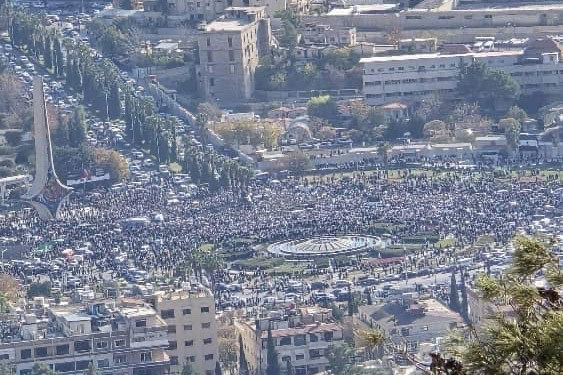
Thousands of people gathered in Damascus on Friday to celebrate the fall of the Assad regime.
However, the most recent edition of the World Drugs Report, released by the UN Office on Drugs and Crime (UNODC) on 26 June, warns that Syria remains a major hub for the drug, despite the crackdown.
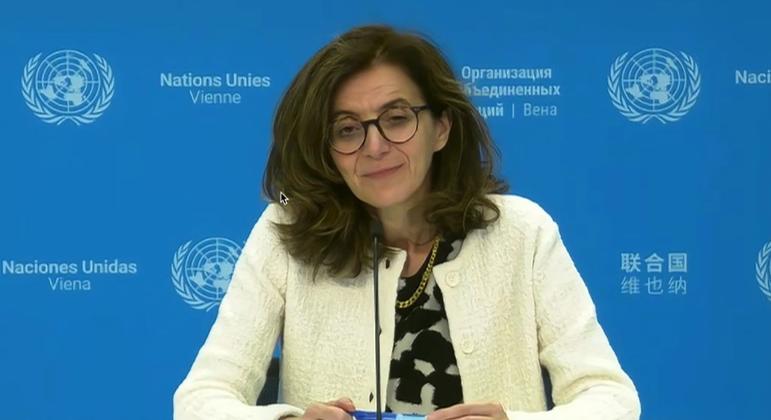
Ahead of the launch, Angela Me, Chief of Research and Analysis at UNODC, talked to UN News about the continued use of Captagon in the region,
Angela Me: Captagon is a stimulant, similar to methamphetamine, which is taken as a pill, and for many years it has been the main drug of concern in the Gulf state and parts of North Africa.
It was called the “Jihadi pill” after it was found that the perpetrators of some terrorist attacks had used it. On the battlefield it helps to maintain energy, which is one reason it is so widespread. But users quickly become dependent, and it causes physical and mental health problems.
UN News: The transitional government of Syria has indicated that they do not tolerate this trade, but your report shows that Syria is still a big hub for Captagon. Who is producing and selling?
Angela Me: There is a lot of uncertainty around that. We see a lot of large shipments going from Syria through, for example, Jordan. There are probably still stocks of the substance being shipped out, but we’re looking at where the production may be shifting to. We’re also seeing that the trafficking is expanding regionally, and we’ve discovered labs in Libya.
UN News: Given the large amounts of money generated by drugs, are there still groups in Syria that would like to carry on the trade in the parts of the country they control?
Angela Me: Definitely, and not only in Syria, but also in the wider region. These groups have been managing Captagon for a long time, and production is not going to stop in a matter of days or weeks.
We are helping countries to tackle the problem from an organised crime perspective, to understand the criminal groups involved, so that they can design responses and solutions: our research shows that there is not one single response to dismantle the groups.
We also help law enforcement to connect with their peers in the region, because this is not a national problem. It’s clearly a transnational problem which goes beyond the Middle East; we have been seeing Captagon traffic through Europe, for example.
Another way we can support is by addressing the health-related issues, sharing evidence-based treatment that can really help people to recover from their dependence on the drug.