

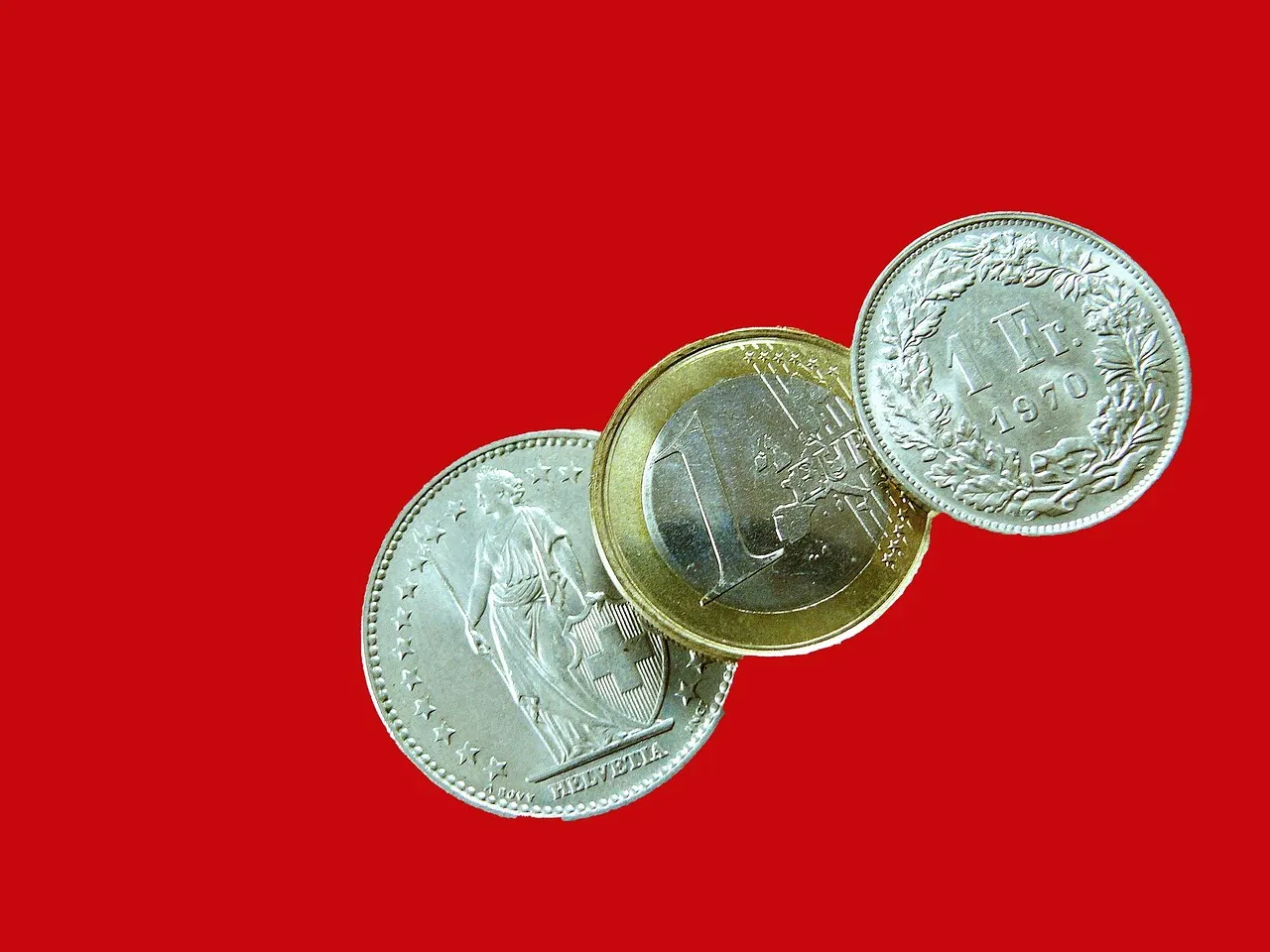
At 0.9210 francs, the euro has reached an unprecedented low against the famously strong franc. What impact will this have on Switzerland’s residents?
The Swiss franc continues to appreciate, while the euro continues its decline.
On October 22nd, the European currency fell to 0.9210 francs – its lowest level ever recorded against the Swiss currency.
It then recovered slightly during the day to trade around 0.9230 francs by early afternoon.
Why has this happened?
This surge in the franc is explained by the context of global uncertainty, which is pushing many investors to turn to currencies considered safe – like the franc.
There is a good reason for that: Switzerland’s currency has resisted global economic downturns much better than other countries’ money.
In fact, over the last few decades, the franc’s value kept increasing while many other currencies have struggled.
This financial resilience, combined with Switzerland’s political, economic, and social stability, as well as low inflation, has boosted the perception of the franc as a strong currency that serves as a ‘safe haven’ (not to be confused with a tax haven – which Switzerland no longer is).
Advertisement
Is this a positive development?
That depends.
A strong franc makes Swiss products more expensive abroad, which penalises exporters and reduces their competitiveness, particularly in key sectors such as watchmaking, precision engineering, and pharmaceuticals (all of which are already suffering due to steep US tariffs).
READ ALSO: Steep US tariffs hit Swiss exports hard, new figures reveal
Even on the eurozone market, Swiss exports are at a disadvantage when the franc is stronger than the euro.
According to Moneyland consumer platform, “to avoid losses, some Swiss manufacturers are forced to raise the price of their export products to compensate. The result is that Swiss products become more expensive for foreign customers. In the worst case, Swiss companies can lose foreign customers because their prices are no longer competitive.”
The discrepancy between the franc and the euro is also likely to impact one of Switzerland’s most important revenue sources: tourism.
That’s because “the stronger the franc gets against the euro, the higher the prices in Switzerland are for tourists from eurozone.”
Advertisement
Who benefits the most from the strong franc-weak euro ratio?
The clear winners are the residents of Switzerland.
For one, imports from the EU become less expensive for Swiss consumers.
But there are more advantages as well – especially in terms of shopping tourism: shopping in eurozone countries will also be (even more) advantageous, as the franc will go much further there than at home.
By the same token, Swiss will pay less for holidays in foreign countries.
With the franc stronger than the euro, you can definitely benefit from travel abroad — at least in terms of accommodations and food while you are there.
And there is another group that will reap benefits from the currency exchange: cross-border workers.
More than 400,000 people from neighbouring eurozone states come to work in Switzerland each day, returning to their home countries at night and on weekends.
As their salaries are paid in francs, and their expenses are in euros, they will certainly benefit from the franc-euro exchange rate.