


As a signatory to the Rome Statute, Switzerland would be obliged to arrest and extradite Putin if he were to enter its territory.
Sputnik
The International Criminal Court (ICC) in The Hague says Switzerland must not allow Vladimir Putin to enter the country – even for peace talks.
+Get the most important news from Switzerland in your inbox
Swiss Foreign Minister Ignazio Cassis has repeatedly stressed that Switzerland stands ready to host peace negotiations between Russia and Ukraine. About a year ago, French President Emmanuel Macron also advocated for a meeting between Vladimir Putin and Volodymyr Zelensky in Geneva. However, the ICC has issued an arrest warrant for the Russian president on charges of war crimes. As a signatory to the Rome Statute, Switzerland would be obliged to arrest and extradite Putin if he were to enter its territory.
It has now emerged that Swiss authorities explored whether the ICC might suspend the arrest warrant for the duration of potential peace negotiations. This week, the court delivered its answerExternal link – and it is unlikely to satisfy Swiss diplomats.
The judges of the ICC’s pre-trial chamber were unequivocal: peace negotiations alone do not justify allowing the Russian president to enter a member state without facing arrest. They recognised only one possible exception – if the United Nations were to convene a peace conference, a temporary suspension of the warrant might be considered.
More

More
Ukraine, war crimes, and Vladimir Putin
‘Room for manoeuvre restricted’
The ruling has direct implications for Switzerland, says Laurent Goetschel, professor of political science at the University of Basel and director of the Swisspeace foundation.
“This decision restricts Switzerland’s room for manoeuvre,” he notes. It will become more difficult for the country to position itself as a host for high-level negotiations on the war in Ukraine.
Goetschel describes the situation as a fundamental dilemma: on the one hand, there is the imperative to end the war; on the other, the need to hold alleged war criminals accountable. “If warring parties face the threat of arrest in advance, their willingness to participate in negotiations is low,” he says.
He is quite critical of the ICC’s position. While it is logical from the standpoint of international criminal justice, he argues that it may “not necessarily be the best solution” when it comes to promoting peace.
More

More
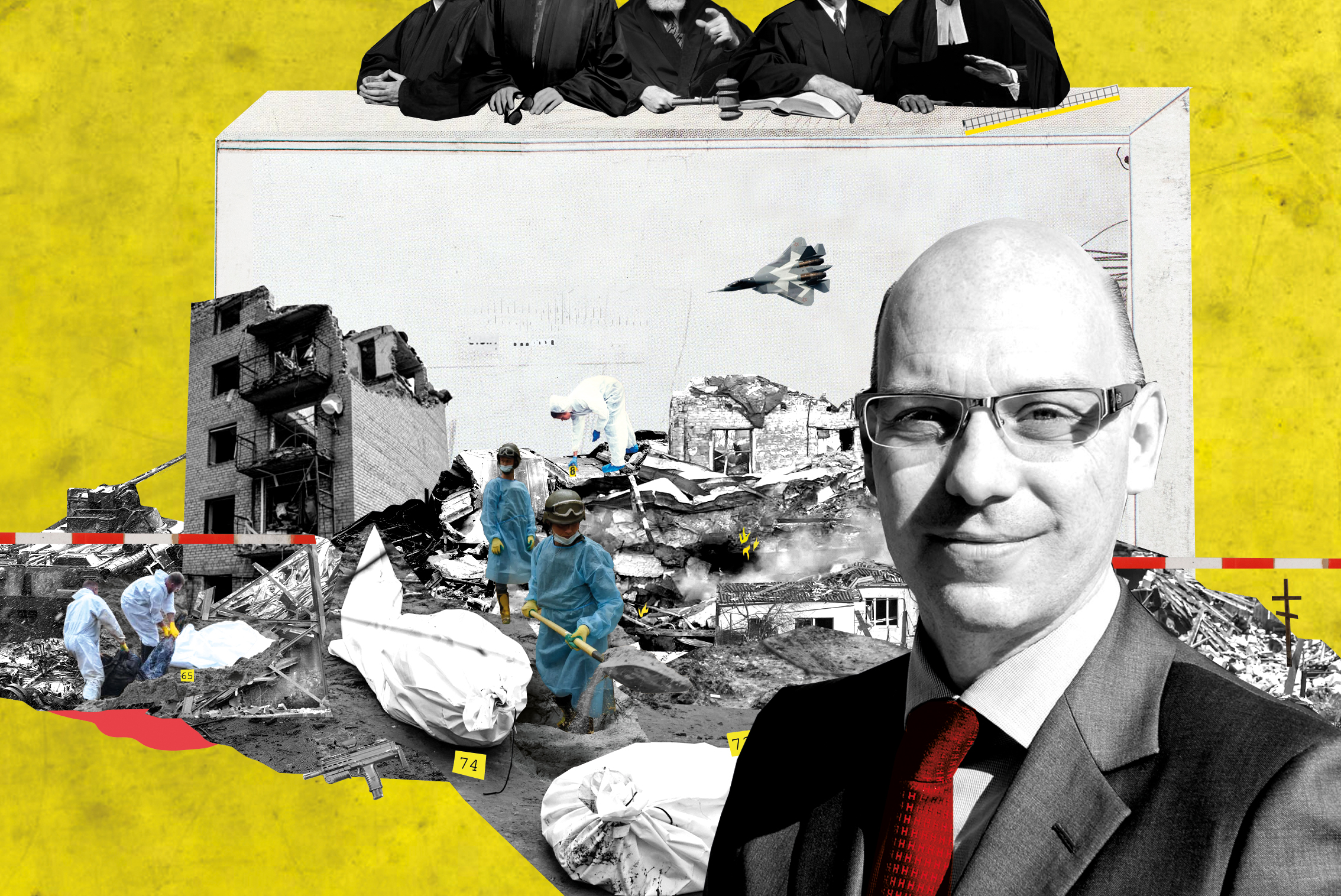
Philippe Currat: Putting Putin on trial is ‘bit of a fantasy’
What are Cassis’s people doing?
What does this mean in practice for Switzerland? Would the Federal Council still consider hosting Vladimir Putin at a negotiating table on Swiss soil?
Neither the foreign ministry nor the justice ministry has provided clear answers. The latter has only stated that the Federal Council will address the issue in due course.
Federal authorities have even declined to confirm whether Switzerland formally requested clarification from the ICC regarding the arrest warrant. In the public version of its statementExternal link, the court redacted any reference to the requesting state. However, according to SRF research, Switzerland was behind the inquiry.
Expert advises: stay engaged
Goetschel says Switzerland to remain actively involved in efforts to resolve the Ukraine conflict. Negotiations rarely begin at the level of heads of state, he notes. Lower-level representatives can still meet and engage in dialogue.
Should talks eventually require the participation of top leaders, Switzerland could seek backing from the UN. The ICC has indicated that there may be room for interpretation if peace negotiations are convened under UN auspices, though legal experts caution that such leeway is far from guaranteed.
More
Adapted from German by AI/sb
We select the most relevant news for an international audience and use automatic translation tools to translate them into English. A journalist then reviews the translation for clarity and accuracy before publication.
Providing you with automatically translated news gives us the time to write more in-depth articles. The news stories we select have been written and carefully fact-checked by an external editorial team from news agencies such as Bloomberg or Keystone.
If you have any questions about how we work, write to us at english@swissinfo.ch