

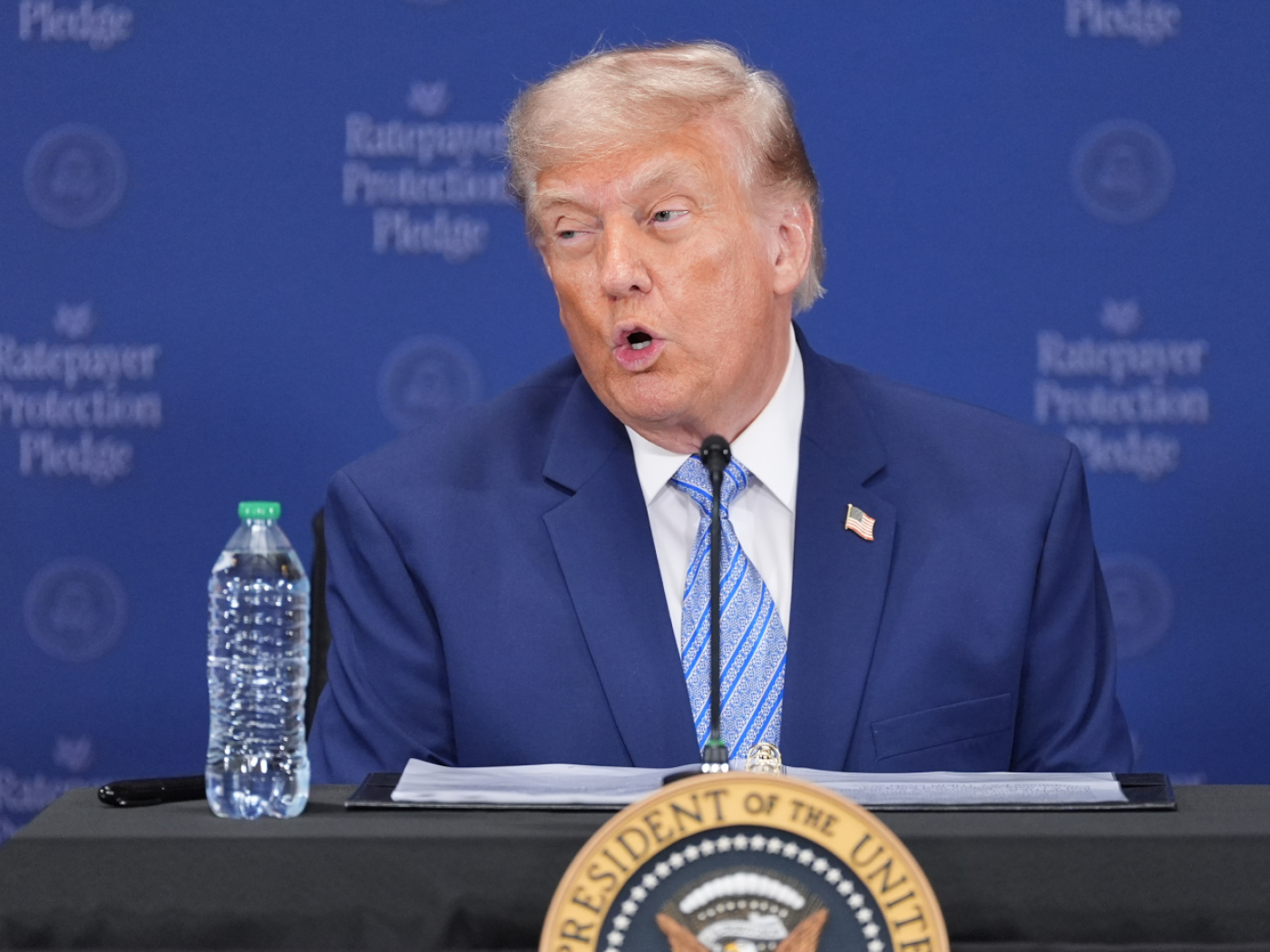
The fresh US tariffs of between 10% and 12.5% target 60 countries, including Switzerland.
Keystone-SDA
Switzerland is among 60 countries that face new US tariffs on Friday for allegedly not doing enough to combat forced labour. A 12.5% tariff has been imposed on Swiss goods.
The new tariffs, ranging from 10% to 12.5%, will apply from 6:01am in Switzerland to a number of products entering the United States. They replace the 10% tariff imposed last February, which expire at the same time.
These temporary tariffs, valid for 150 days, had been introduced by US President Donald Trump in the wake of the Supreme Court’s decision to overturn the majority of the tariffs imposed since his return to the White House.
This new tariff is the result of an investigation launched in mid-March by the US Trade Representative Jamieson Greer, to determine whether the United States’ trading partners had completely eliminated forced labour from their supply chains.
Swiss products subject to a 12.5% tariff
“President Trump recognises that decades of moral suasion have not eradicated forced labor from global supply chains. The United States has had a forced labor import ban for nearly a century, and rigorously enforces it; it’s well past time for our trading partners to do the same,” said Ambassador Greer.
Countries with legislation that the United States considers inadequate will have a 10% tariff imposed on a number of their products. This will apply in particular to the countries of the European Union (EU), the United Kingdom, Mexico and Canada – some of the United States’ most important trading partners.
For the others – around 40 countries – a 12.5% tariff will apply to their products. Switzerland, China, Japan and South Korea are among those affected. However, there are likely to be exceptions. In particular, energy and raw materials not produced in the United States are expected to be excluded from the list of affected products.
The Swiss Federal Department of Economic Affairs, Education and Research has taken note of the new tariffs, as it stated on social media platform X. However, it “firmly rejects the allegations of forced labour”.
For the Swiss business association Economiesuisse, these tariffs are incomprehensible and unjustified. This decision “weighs heavily on Swiss companies” operating in the US market and “creates competitive disadvantages compared with countries that have lower rates”, including the EU and the UK, stated the umbrella organisation for Swiss businesses, which is calling on Switzerland to continue negotiations.
Legal uncertainty
The White House hopes that this new tariff will not suffer the same fate as the one introduced last year. To ensure its viability, the US Trade Representative has relied on the same legislation that has so far been used to justify sector-specific tariffs – on steel, aluminium, copper, construction timber and the automotive sector, amongst others – which were not struck down by the Supreme Court in February.
Several other investigations are also under way, again based on this same legislation, notably concerning possible industrial overcapacity. Switzerland and the European Union (EU), which are subject to the forced labour surcharge, are also affected by this investigation.
Shortly before this latest round of tariffs, the US government had announced surcharges on Brazil, which since Wednesday has been subject to 25% on nearly half of its exports to the United States.
On Monday, Canada was in turn hit by an additional 50% tariff, which is due to come into force in a month’s time. However, in both cases, the US government has already adjusted its strategy: rather than targeting all products from these countries, the tariffs apply only to a subset of them.
+ How we produce English news
Translated from German, reviewed by an English Department journalist.