

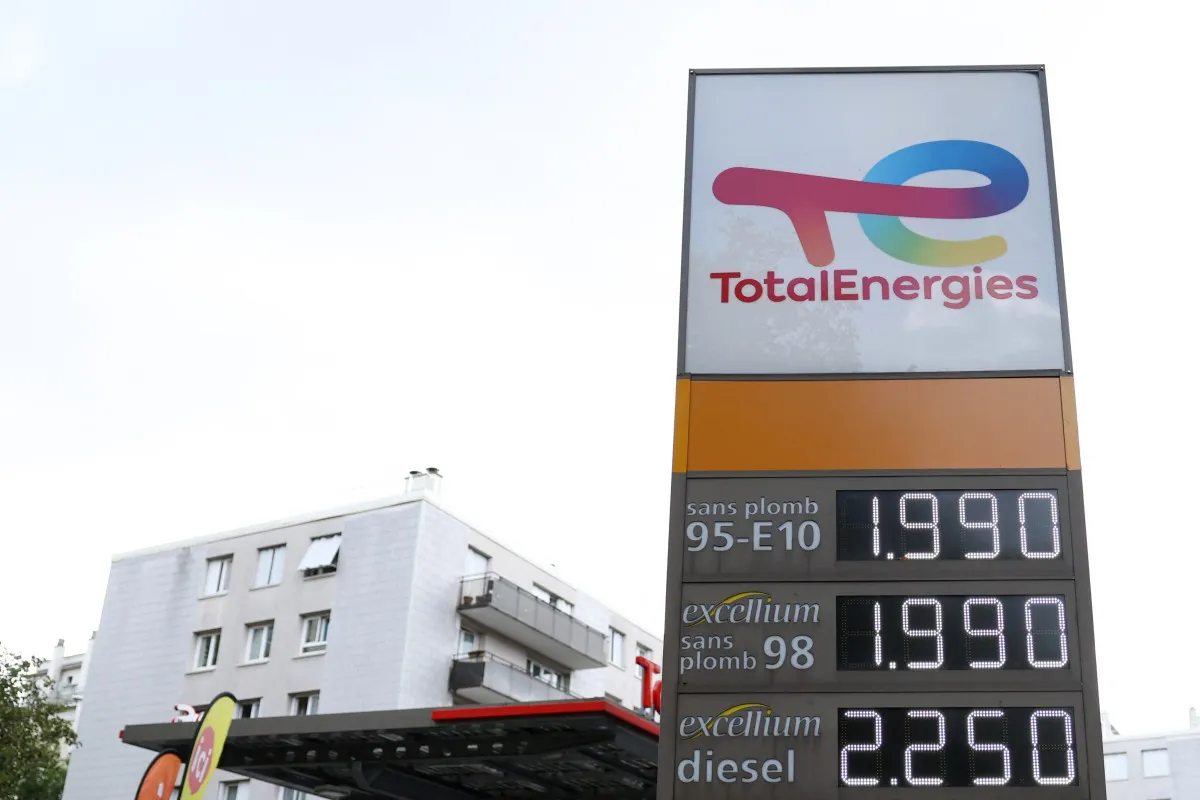
Fuel prices are rocketing around Europe but in some countries the cost of filling a tank is far higher than in others, partly because governments are taking different measures to tackle the crisis.
The skyrocketing price of fuel, caused by war in the Middle East, is hitting drivers hard around Europe. Depending on where people live, many have been forced to cross borders to neighbouring countries in Europe to get cheaper fuel.
Governments in Europe have come under pressure to relieve the financial burden on motorists, but the measures have not been uniform and have had differing impacts on prices.
The EU has also been called on by various governments to take its own measures to help ease the crisis.
We’ve compared the countries covered by The Local to understand where in Europe you’ll pay the least for fuel and what national governments are doing to ease the crisis.
Germany
Fuel prices in Germany remain near record highs, with average prices in mid-September reaching around €2.31 per litre for E10 petrol and €2.47 per litre for diesel following disruptions to global oil supplies linked to the Iran conflict.
To provide relief, the federal government plans to reintroduce a fuel tax cut from October, reducing prices by up to 17 cents per litre including VAT effects. The measure is expected to run until the end of 2026.
A fuel price cap is then due to be introduced in January 2027, limiting how much suppliers can charge and aiming to prevent excessive profit margins during the energy crisis.
READ ALSO: What does Germany’s fuel price cut mean for drivers?
Austria
In Austria, the average pump price on September 21st was €1.925 per litre for Eurosuper 95 petrol and €2.238 for diesel, according to the Austrian fuel industry association.
Fuel prices are now back around the crisis levels seen in March, when prices jumped sharply following the escalation of the Iran war. At the start of January, Eurosuper 95 averaged about €1.47 a litre and diesel €1.50, meaning current prices are roughly 31 percent and 50 percent higher respectively, despite a substantial drop in prices during late spring and early summer.
Drivers living near the border could benefit from lower prices in neighbouring countries. In mid-September, average prices in Slovakia were around 9 cents per litre lower for petrol and 27 cents lower for diesel than in Austria. Cross-border searches for cheaper fuel have already been reported earlier this year, including drivers seeking fuel around 20 cents per litre cheaper on the Czech side.
The Austrian government’s temporary “Spritpreisbremse” currently cuts mineral oil tax by 1.9 cents per litre until the end of September and requires falling international wholesale prices to be passed on quickly to motorists. The scheme can be extended month by month, although no October extension has yet been announced.
The government has also kept open the option of restoring a cap on fuel-industry margins if prices rise sharply again, but the coalition remains divided over using that measure.
READ ALSO: EXPLAINED: What is Austria’s plan to stop fuel price increases?
Switzerland
Fuel prices for all grades are climbing up, having exceeded the 2-franc per litre (€2.13) threshold.
Diesel prices, in the meantime hit a record-high on September 18th.
At 2.41 francs (€2.56) charged per litre – an increase of 11 cents in a single week – it now exceeds the previous record of 2.40 francs set in 2022.
As for unleaded 95 – the most commonly used in Switzerland – it has also become more expensive, having reached 2.10 francs (€2.23) per litre – an increase of 5 cents in a span of week.
The government has not stepped in to regulate the prices, as this would go against the ‘freedom of commerce’ principle common in Switzerland; fuel prices are market-driven, set by private distributors and petrol station operators.
France
The French government has come under increasing pressure to ease the crisis as the prices at the pumps hit a record highs.
According to an AFP analysis of public data released Tuesday, average French fuel prices reached record highs.
The average price of Diesel was at €2.41/litre, the price of SP98 unleaded was at €2.27/litre and SP95-E10 unleaded petrol stood at €2.17 / litre.
Protests against rising fuel prices have already erupted, with fishermen blocking oil depots last week. Political leaders fear a resurgence of movement similar to the 2018 “Yellow Vests” (Gilets Jaunes) protests, which originally sparked over a fuel tax hike.
As well as high prices there have also been shortages of fuel. Out of almost 10,000 petrol stations across France, 16 percent were running short of at least one type of fuel, according to official figures published on Monday 21st September.
French media have been reporting on motorists crossing the border into Spain or Belgium to save money on filling their tanks.
Sweden
The average price of petrol and diesel stood at 17.59 kronor and 22.86 kronor (€1.57 and €2.03), respectively, on September 22nd according to comparison site Bensinpriskollen.se.
It may get more expensive in the coming few months.
Sweden in spring and summer temporarily lowered taxes on petrol and diesel in two steps by in total 4 kronor per litre including VAT, following price hikes in the wake of the Iran war.
That tax cut is set to expire this winter, which means that prices should increase by 1 krona on October 1st and 3 kronor on December 1st.
Sweden is currently in the process of trying to form a government after its recent election. Neither the centre-left Social Democrats nor the outgoing centre-right Moderates have ruled out extending the tax break. However, a caretaker government is generally unable to implement any major policies until it has been replaced by a permanent government, which means that it will depend on how long it takes Sweden to form a government.
Norway
Fuel prices in Norway remain among the highest in Europe, despite the country being Western Europe’s largest oil and gas exporter.
By mid-September, diesel cost between 25.34 and 30.95 kroner per litre (€2.20 to €2.70).
Unleaded 95 petrol stood between 23.48 and 29.18 kroner per litre (€2.05 to €2.55), and premium unleaded 98 ranged from 24.12 to 31.49 kroner per litre (€2.10 to €2.75).
The Norwegian government introduced temporary fuel tax cuts earlier in the year, but the five-month measure expired on September 1st, leading to a considerable jump in prices for drivers.
Opposition parties are calling for new subsidies, but the government says there is no “crisis” and has confirmed there are no plans for further tax relief at this time.
For years, many Norwegian drivers have travelled to neighbouring Sweden to reduce high fuel costs. This trend has grown with the recent surge in prices, as fuel across the border remains significantly cheaper than filling up locally.
Denmark
In Denmark, fuel prices hit a new record high in September – 19.19 kroner per litre (around €2.57).
A recent survey by Voxmeter on behalf of Danish news wire Ritzau showed that a majority of respondents – 53.8 percent – want politicians to take action to lower fees on fuel.
Finance Minister Peter Hummelgaard, from the Social Democrats, said in a post on Facebook that the government is aware of the issue and that both the current and previous governments have taken steps to improve people’s personal finances in order to make up for higher prices.
“We’re not blind to what is happening. If energy prices continue to rise and the situation develops further then of course we are ready to do more,” he said.
Neither Hummelgaard or his party’s policy spokesperson Rasmus Stoklund would go into detail on what exactly the government would do if this were to happen.
Italy
Petrol prices in Italy have increased by 20 percent in the past six months, with diesel prices up by about 7 percent – and both continue to rise by the day.
Gas prices as of September 22nd average between €2.139 to €2.194 per litre depending on location, with the Marche region with the lowest prices and Bolzano with the highest. The average cost for a litre of diesel is between €2.313 and €2.368.
In April 2026, these prices averaged at €1.79 for petrol and €2.18 for diesel.
Last week Italy renewed an excise duty cut for diesel fuel until September 25th, after which prices the subsidy will decrease and prices are expected to climb even further.
For non-diesel fuel users, rather than subsidise costs directly at the pump, the government has announced a temporary lifting of the annual road tax for eligible vehicles. It’s estimated that 24.6 million people in Italy will be able to benefit.
READ ALSO: EXPLAINED: Will you benefit from Italy’s abolished road tax in 2027?
Spain
Fuel prices have increased by more than 30 percent over the past three months in Spain.
Prices have now surpassed the peak recorded in the weeks immediately after the start of the war in Iran, and continue on an upward trajectory.
The Spanish government slashed VAT on fuels from 21 percent to 10 percent in March, but this cost-cutting measure ended in July, leading to a considerable jump in prices for drivers.
One in four petrol stations in Spain now charge above €2 per litre of unleaded 95 petrol.
As of September 22nd, petrol prices in Spain stand at an average of €1.926 per litre (unleaded 95) and diesel is going for €1.933.