

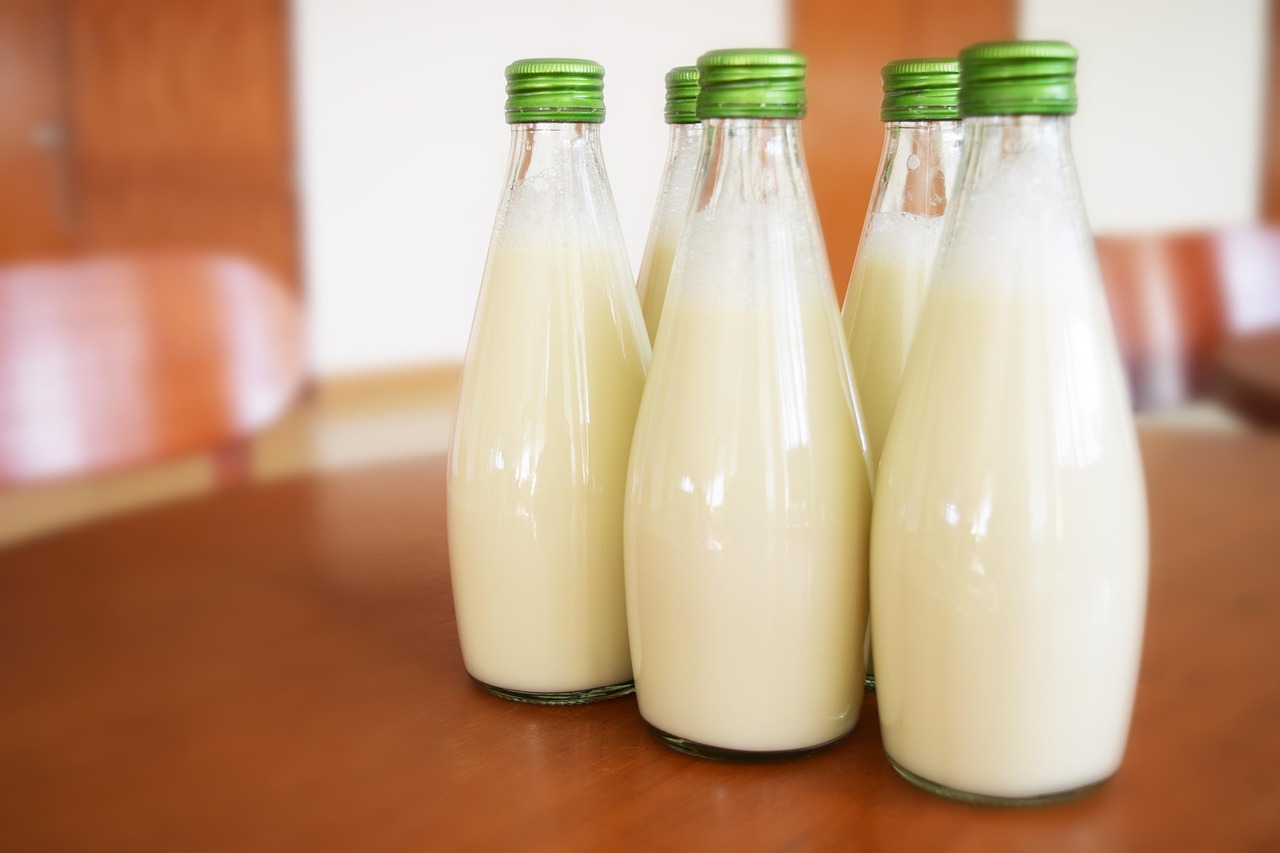
The only two varieties of milk available for sale in Swiss grocery stores are pasteurised — that is, heated to destroy harmful bacteria — or UHT (ultra-high temperature).
The difference between the two processes is the temperature at which they are heated to kill pathogens — up to 100C for the former and up to 140C for the latter.
Both are safe for consumption before their use-by date, but the UHT milk has a longer shelf life and doesn’t need to be refrigerated until opened.
All types of milk, whether ‘whole’ (full-fat) or the one containing less fat, fall under one of these categories.
Raw milk, on the other hand, comes, almost literally, straight from the cow, but carries various germs that could be harmful to human health.
Why then, do some people, swear by this untreated variety?
That’s because it has been proven to have some positive effects on the digestive system and general health.
According to Agroscope, the research arm of the Federal Department of Agriculture, “bacteria in the human gut affect us in a number of ways: in addition to performing an immunological function, synthesising vitamins, and breaking down dietary fibre, they possess metabolic properties involved in the prevention of obesity and cardiovascular diseases. They even influence our mental health.”
And that, Agriscope said, can be achieved by drinking raw milk.
Advertisement
What does the Swiss law say?
Because untreated (that is, unheated to certain temperature) milk can sometimes cause serious digestive reactions, Swiss food regulations don’t allow it to be advertised or sold for direct consumption — which is why you won’t find it in any mainstream supermarkets.
But the Swiss also believe in self-determination and personal responsibility, so there is no outright ban on this product.
It can be purchased directly from dairy farms. In fact, there are several hundred raw milk vending machines associated with different milk producers scattered around the country.
However, they all must carry a warning label telling buyers that they must heat the milk before consumption.
Whether they actually do, or drink it raw, is not known.
Advertisement
What about cheese made from raw milk?
There are plenty of those in Switzerland, though most tend to be pasteurised.
As to their risk factors, hard cheeses are safer to consume than soft ones, which are more likely to contain bacteria.
In fact, several years ago, 14 children and staff members at a Swiss boarding school consumed ‘Tomme’, a soft cheese produced from raw milk.
Within seven hours, all of them fell ill.