
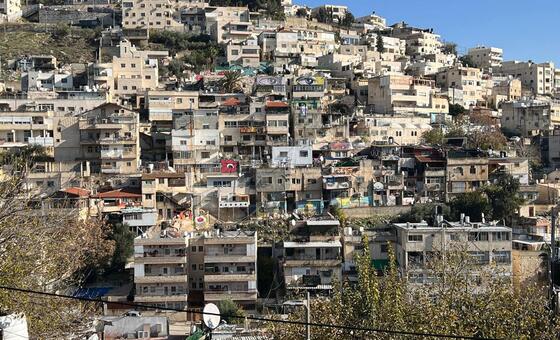
The measures would make it easier for Jewish settlers to take over Palestinian land, thus expanding Israel’s power in the territory, according to media reports.
The UN chief warned that the current trajectory on the ground – including this decision – is eroding the prospect for the two-State solution, according to a statement issued by his Spokesperson.
Settlements are illegal
He reiterated that all Israeli settlements in the occupied West Bank, including East Jerusalem, and their associated regime and infrastructure, have no legal validity and constitute a flagrant violation of international law, including relevant UN resolutions.
“Such actions, including Israel’s continued presence in the Occupied Palestinian Territory are not only destabilizing but – as recalled by the International Court of Justice – unlawful,” the statement said.
The Secretary-General called on Israel to reverse the measures.
He also urged all parties “to preserve the only path to lasting peace, a negotiated two-State solution, in line with relevant Security Council resolutions and international law.”
Heading off course
UN Spokesperson Stéphane Dujarric was asked about the statement during his regular briefing to journalists in New York.
“These decisions are not moving us in the right direction,” he said.
“They are driving us further and further away from a two-State solution and from the ability of the Palestinian authority and the Palestinian people to control their own destiny.”
Ongoing aid efforts in Gaza
Meanwhile, humanitarians in the Gaza Strip continue to respond to the immense needs of the population despite impediments and a challenging operating environment.
The UN and partners are serving hundreds of thousands of meals each day, in addition to providing digital cash and monthly rations, Mr. Dujarric said.
Colleagues report that Gaza City continues to face a severe shortage of drinking and domestic water despite the recent re-opening of the valve on the Mekorot supply line there that connects Israel to Gaza for fresh water.
Water and hygiene support
Currently, only 6,000 cubic metres of water are reaching people in Gaza City every day, with significant losses in hard-to-reach areas.
“To mitigate this shortfall, we and our partners have increased water production and trucked deliveries from groundwater wells and private sector desalination plants,” he said.
Aid partners have distributed over 100,000 water jerry cans across the Gaza Strip since late January, he added.
They have also provided over 700,000 bars of soap, over 25,000 hygiene kits, over 400 household latrines, and 250 anti-lice kits
Explosive ordnance threat
Since Wednesday, humanitarians working in mine action have conducted over 200 assessments of potential explosive hazards in support of the removal of debris.
They reached over 10,000 children and adults last week with education warning them of the risks of explosive ordnance which remains a major threat.
Thirty-three explosive ordnance incidents have been reported since the ceasefire came into effect last October, resulting in nine deaths and 65 injuries.
Restrictions and limitations
UN aid coordination office, OCHA, noted that humanitarians continue to be hampered by restrictions, including limitations on the entry of so-called “dual use” items and those listed as non-humanitarian in nature.
This includes spare parts and certain shelter materials.
Humanitarian operations are also being undermined by Israel’s de-registration of some international non-governmental organizations (NGOs) and restrictions imposed on the UN agency that assists Palestine refugees – UNRWA – and sister agencies.