
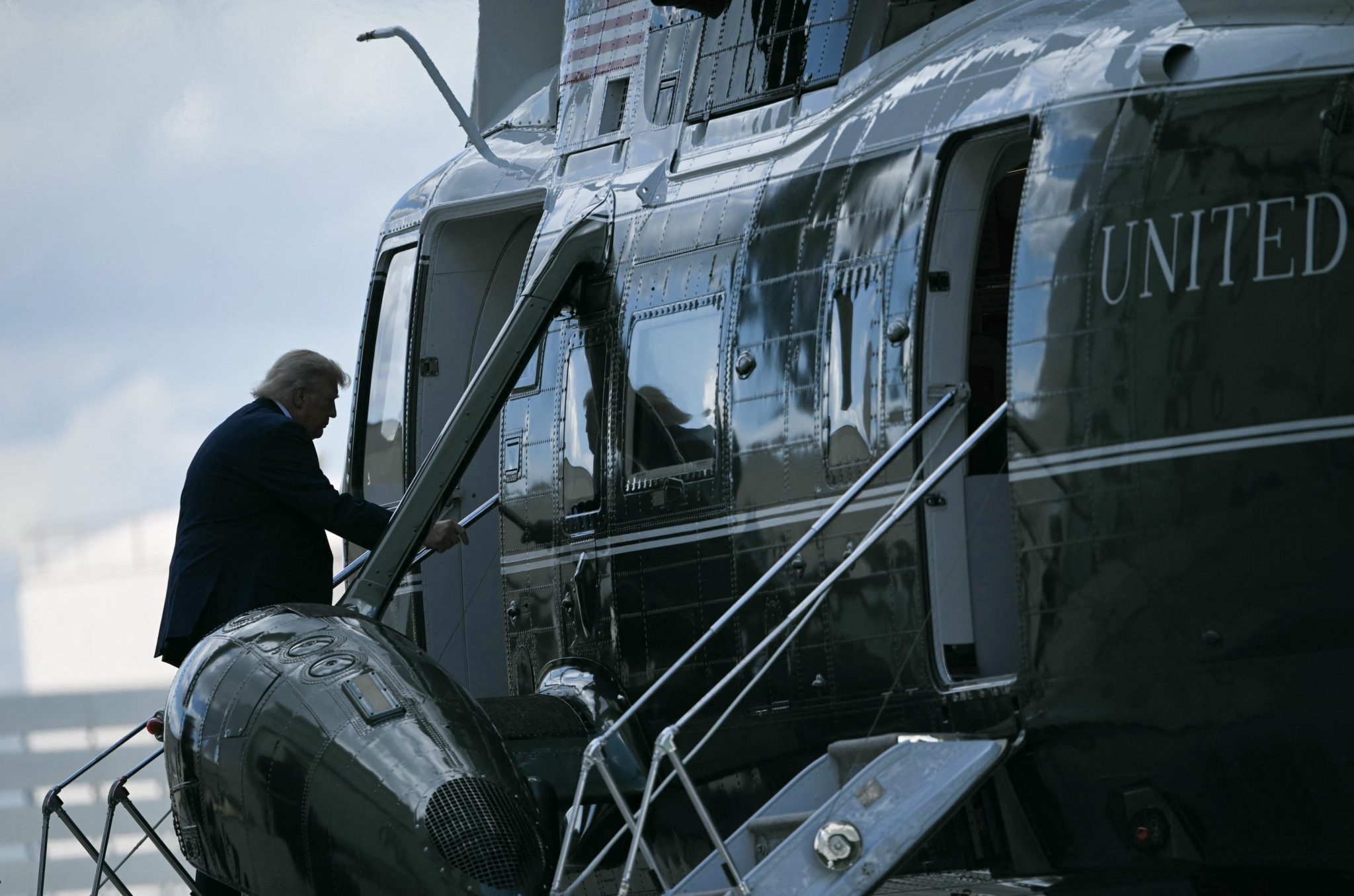
U.S. stock futures fell after peace talks between the U.S. and Iran got off to a rocky start on Sunday, as President Donald Trump wasted no time with threats to renew war.
Futures tied to the Dow Jones industrial average fell 156 points, or 0.30%. S&P 500 futures were down 0.46%, and Nasdaq futures lost 0.52%.
But oil prices reversed earlier gains after negotiation mediators Qatar and Pakistan reported “encouraging progress” with the creation of a line of communication over the Strait of Hormuz and the a “de-confliction cell” to end fighting in Lebanon.
U.S. oil futures were flat at $76.58 a barrel, while Brent crude fell 1.45% to $79.36. Gold dropped 1.15% to $4,196.10 per ounce.
Earlier in Switzerland, Vice President JD Vance said both sides had already made “great progress” in talks, saying the U.S. side represented an “outstretched hand” toward the people of Iran.
But after Iran said Saturday that it’s closing the Strait of Hormuz again as Israel continues attacking Hezbollah positions in Lebanon, Trump told Fox News on Sunday he spoke with Iranian officials and warned them, “You close it and you won’t have a country. You won’t even make it back to your f–king country.”
He also said the U.S. may take over the strait, adding “I’ll blow the s–t out of them. If they don’t make a deal, we’ll collect tolls.”
Last weekend, Trump and Iranian officials confirmed they agreed on a memorandum of understanding that reopens the strait, ends the U.S. naval blockade, and begins a 60-day period for both sides to negotiate other issues like Tehran’s nuclear program and relief from U.S. sanctions.
But on Sunday, the president claimed that after the 60-day negotiation window ends, “I can do whatever I want.”
While Iran halted talks after Trump’s comments, its delegation remained in Switzerland to continue negotiations. But Lebanon will remain a sticking point. Israeli Prime Minister Benjamin Netanyahu reiterated that he would keep military forces in southern Lebanon “as long as we need to protect our people.”
Until the situation in Lebanon settles down, talks over Iran’s nuclear program will take a back seat. In addition, the tug-of-war over the Strait of Hormuz will drag on.
After Iran declared it closed, U.S. Central Command insisted safe passage through the strait remained intact and that traffic is up. It added that U.S. forces are still operating in the area to support freedom of navigation and pointed out that the Joint Maritime Information Center issued an advisory on Thursday affirming that a southern route along Oman’s coast is safe.
While the U.S. ended its naval blockade on Iran as part of the MOU, Central Command also said “U.S. forces remain present and vigilant to ensure all aspects of the agreement with Iran are adhered to, obeyed, and in full force and effect.”
For its part, Tehran’s new Persian Gulf Strait Authority warned that ships must follow a regime-established route that passes along the Iranian coast and that alternatives are prohibited.
And despite its deal with the U.S. banning tolls for 60 days, the PGSA is requiring insurance that will eventually come at a cost.
“At present, this insurance is provided free of charge to the vessel owner, with all expenses covered by the Islamic Republic of Iran,” Iran said. “The PGSA reserves the right to introduce insurance fees in the future, which will be determined by the relevant insurer. Owners will then be required to purchase and renew coverage accordingly.”