

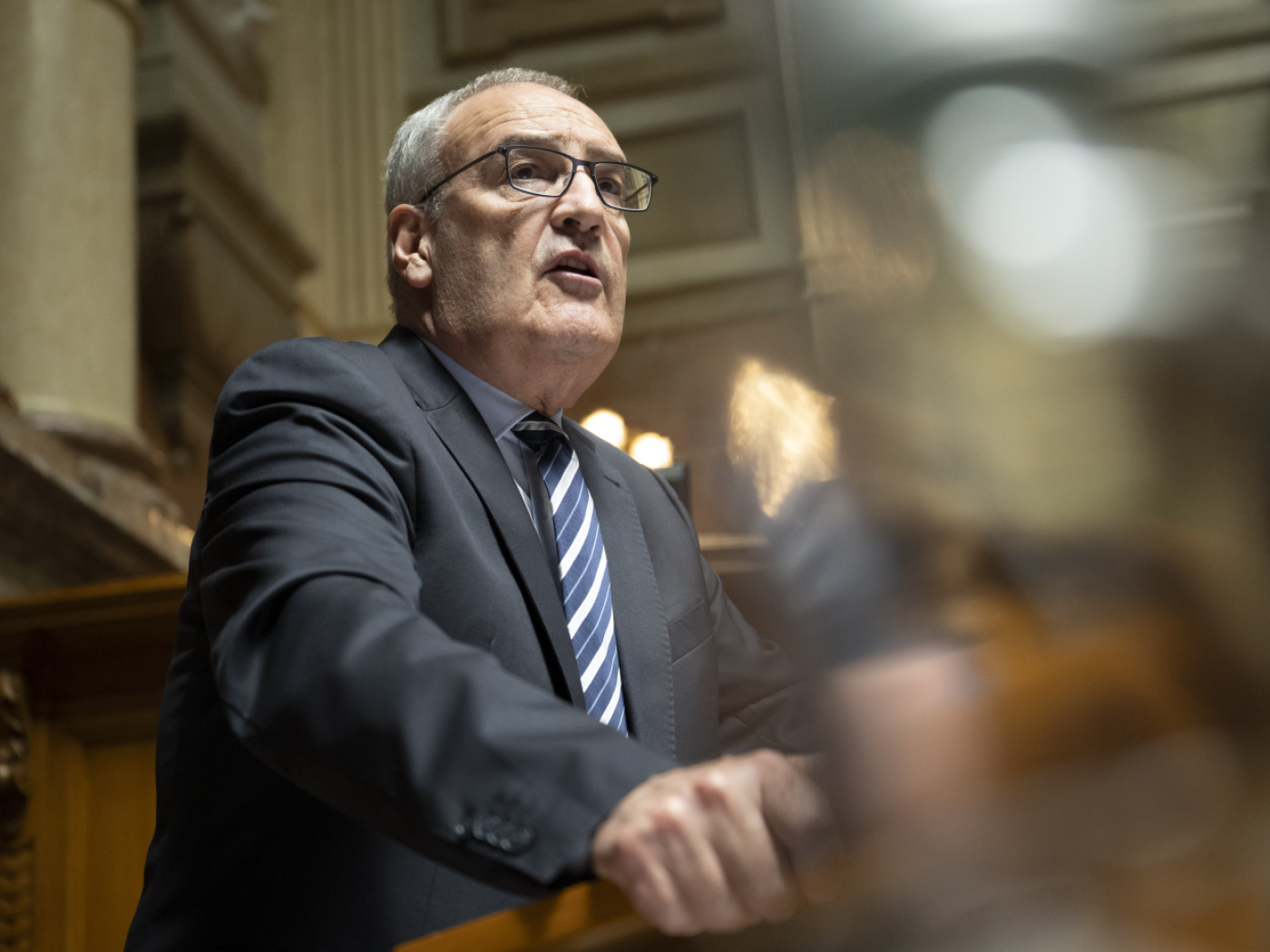
National Council discusses details of the Mercosur free trade agreement
Keystone-SDA
The Swiss House of Representatives has rejected the free trade deal between the European Free Trade Association (EFTA) states and the Mercosur states Argentina, Brazil, Paraguay and Uruguay. The result on Wednesday was 96 to 86 votes and nine abstentions.
+ Get the most important news from Switzerland in your inbox
In the House, the Social Democratic party and the Greens as well as part of the right-wing Swiss People’s Party parliamentary group voted no. Negative votes also came from the Centre party.
In the detailed consultation, both accompanying measures for farmers – a commitment credit of CHF880 million ($1.1 billion) for several years – and the adoption of the EU Deforestation Regulation were rejected.
The debate was at times emotional. The reason for this was amendments to the resolution on the agreement requested by minority members and additional funds, including for Swiss farmers and for the Amazon Fund for the Protection of the Rainforest and the Rights of Indigenous Peoples. Several sides addressed a possible referendum.
The agreement was negotiated by the EFTA states (Switzerland, Iceland, Liechtenstein and Norway) with the Mercosur states Argentina, Brazil, Paraguay and Uruguay with around 270 million inhabitants. In 2024, Swiss exports to the Mercosur states amounted to over CHF4 billion.
According to the agreement, 96% of Swiss exports to Mercosur are to become duty-free. Switzerland would also grant the four Mercosur states 25 bilateral import quotas for sensitive agricultural products, including meat and wine. Most quotas are limited, and Switzerland can manage them autonomously.
Customs savings of around CHF155 million per year are expected. The bill will now go to the Senate. If it approves the federal decision on the Mercosur free trade agreement, the House will deal with it a second time.
More

More
Beyond tariffs: how Switzerland turned trade talks into climate action with Mercosur
Translated from French by AI/jdp
We select the most relevant news for an international audience and use automatic translation tools to translate them into English. A journalist then reviews the translation for clarity and accuracy before publication.
Providing you with automatically translated news gives us the time to write more in-depth articles. The news stories we select have been written and carefully fact-checked by an external editorial team from news agencies such as Bloomberg or Keystone.
If you have any questions about how we work, write to us at english@swissinfo.ch.