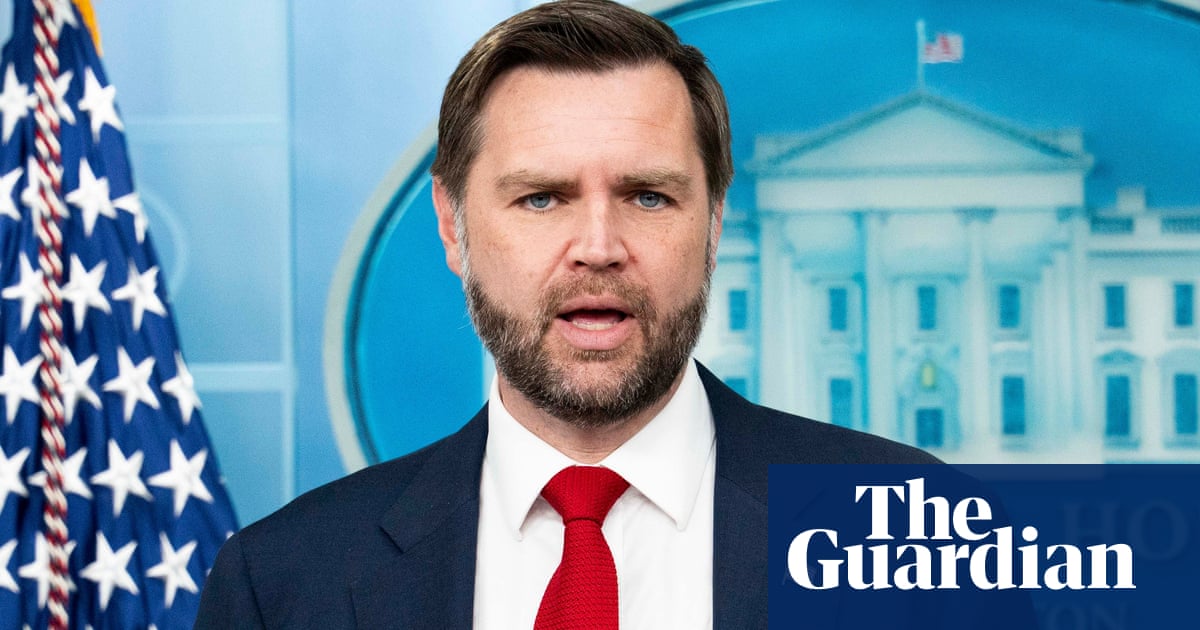
You can call it “a discrepancy.” Since the term comes from CIA Director John Ratcliffe, appointed by US President Donald Trump, one must express it politely. But the issue itself is anything but polite. At stake is the conclusion of a conflict that has brought the world to the brink of a far wider war. When governments across the globe mobilize around a diplomatic initiative, and when the president of the world’s most powerful nation assumes the mantle of peacemaker, one naturally assumes he is acting on the basis of reliable information. One assumes the Iranians are prepared to cooperate, writes Fiamma Nirenstein.
Trump warns, travels, signs agreements and attends international summits. The world celebrates. The G7 applauds. Words such as “agreement” and even “peace” begin to dominate the conversation. According to Trump’s practical, business-oriented logic, the calculation seems straightforward. Iran has been weakened, impoverished and stripped of much of its military capacity and regional proxy network. Why wouldn’t it agree to a deal?
Thus, after months of discussion about defeating Tehran’s murderous regime, after promises to curb terrorism and halt the ayatollahs’ nuclear ambitions, the narrative suddenly changes. Iran, we are told, may surrender enriched uranium, ease tensions in strategic waterways and stop destabilizing the Middle East and the West. Only Israel appears dissatisfied. And that dissatisfaction is quickly transformed into another opportunity to isolate Israeli Prime Minister Benjamin Netanyahu, who is routinely criticized for defending Israeli citizens from continuous attacks by Iranian-backed terror organizations. Once again come the familiar accusations: “Occupation!” Israel must stand down, withdraw and trust that the regional situation will somehow improve. The expectation seems to be that Iran will ultimately accept a financial package in exchange for peace.
Really? No.
Ratcliffe has publicly identified what he calls a discrepancy between what Iranian officials say in negotiations and what they tell one another privately. In other words, according to the CIA director, Iran has shown no genuine intention of abandoning uranium enrichment, ending its support for Hezbollah and other proxies, or relinquishing the ideological foundations of the Islamic Republic. This should surprise no one familiar with the Middle East. Something similar can be inferred from suggestions that Syrian forces under Ahmad al-Sharaa might one day help stabilize Lebanon. Anyone familiar with the region understands the dangers inherent in such fantasies. Sectarian violence does not disappear because diplomats wish it away. Yet Trump appears determined to assert his own version of reality.
He seems unwilling to listen to what Iranian leaders are actually saying. Some of his closest allies are alarmed. Secretary of State Marco Rubio and Defense Secretary Pete Hegseth have reportedly expressed reservations. Sen. Lindsey Graham has warned that it is an understatement to believe Iran can simply be bought into moderation. Once sanctions relief and financial resources begin flowing again, Tehran could quickly become an even greater threat to Gulf stability, energy markets, terrorism and nuclear proliferation. Sen. Ted Cruz has described the prospect as a “disastrous mistake.” Conservative commentator Mark Levin has warned that Iran will not honor any promises it makes. Others note that even a 60-day pause could provide Tehran with valuable time to restore parts of its nuclear infrastructure and move closer once again to a viable nuclear weapons capability. The problem is not merely tactical. It is ideological.
The Islamic Republic’s reason for existence is rooted in a revolutionary worldview. Its leaders see themselves as engaged in a historic struggle against the enemies of Islam. The doctrine of Vilayat-e Faqih, which underpins the regime, has not changed. Nor have its practices: repression of dissidents, persecution of women who defy compulsory veiling, executions of political opponents and brutal treatment of minorities. This same ideology shapes its behavior abroad. The regime’s objective is not peaceful coexistence but dominance. It seeks influence through intimidation, subversion, proxies and war. Its leaders continue to define themselves through opposition to what they view as Judeo-Christian civilization and Western influence. Its conduct is destructive both internally and externally.
At home, it devours its own citizens through repression. Abroad, it exports instability and violence. How much more evidence is required to understand that the reassuring smiles of Iranian Foreign Minister Abbas Araghchi cannot be taken at face value? Yet much of the Western media seems eager to embrace a different narrative. The New York Times and others increasingly celebrate Persia’s ancient civilization while framing American and Israeli concerns as manifestations of imperialism. Historical admiration becomes an excuse for strategic confusion. Beyond the businessman, there is also the most ambitious president—a leader who wants to secure a historic diplomatic achievement and be remembered as the peacemaker who transformed the Middle East. That ambition appears to have produced increasingly optimistic assessments of Iran’s intentions.
At times, Trump speaks as if today’s Iran is somehow more moderate, more pragmatic and more willing to compromise than the regime that spent decades financing Hezbollah, Hamas, the Houthis and countless other instruments of terror. At the same time, he publicly urges Netanyahu to act “responsibly,” as though Israel’s greatest challenge were not the regime that openly seeks its destruction but the determination of its own leaders to prevent that outcome. I find this deeply troubling. In pursuit of what is not even a genuine peace agreement, the United States risks abandoning the moral clarity that once defined its opposition to the world’s leading state sponsor of terrorism.
The Jewish people, once again, are being asked to trust promises made by those who have repeatedly demonstrated that their promises are worthless. To imagine that such a regime can be transformed through financial incentives alone is not realistic. It is wishful thinking. Ignoring the warnings of the CIA in pursuit of political consensus may prove to be a costly mistake. Azerbaijan and the emerging alliance reshaping the Middle East (7 June, 2026 / JNS) Azerbaijan is a unique country. Though Muslim and Shi’ite, it is a secular state determined to modernize. Nationalist in outlook, it is led by President Ilham Aliyev, who maintains excellent relations with both the United States and Israel, while relations with Iran remain defined largely by mutual distrust. International media have recently reported what many observers long suspected: Along Azerbaijan’s 700-kilometer border with Iran, clandestine Mossad sites reportedly operate as part of a broader regional intelligence network from which Israel can monitor and potentially launch operations against the Islamic Republic.
Such facilities may have played a role in recent actions against senior Iranian figures, including Rahman Moqadam, head of foreign recruitment for the Islamic Revolutionary Guard Corps. Relations between Azerbaijan and Israel have flourished since the collapse of the Soviet Union in 1991. Israel was among the first countries to recognize the newly independent state, and the two nations have since built a strategic partnership. Azerbaijan provides oil and energy; Israel contributes technology, intelligence, weapons systems and innovation. Israeli Foreign Minister Gideon Sa’ar met with Aliyev in Baku in January. During the Nagorno-Karabakh wars, much of Azerbaijan’s military capability was based on Israeli technology. The country was also among the first purchasers of Israel’s Iron Dome missile-defense system. While Azerbaijan’s relationship with Washington cooled during the Biden administration because of growing U.S. ties with Armenia, the return of President Donald Trump has helped revive a strategic axis that could reshape the region’s geopolitical map—provided the Iranian threat is neutralized and Russian influence is contained.
The emerging alignment extends well beyond Azerbaijan. The United Arab Emirates has been a cornerstone of this process since signing the Abraham Accords in 2020. Bahrain shares concerns about Iranian aggression. Morocco has become a reliable Western partner in confronting jihadist extremism. Egypt and Jordan, despite periodic tensions, remain committed to peace. Saudi Arabia continues to pursue its own interests, but ultimately may find that its future lies within a broader Western-oriented alliance. Trump’s belief that many Muslim countries are prepared to work with Israel against Iran and its violent proxies is not a fantasy. It reflects a strategic reality that has been developing for years. For years, Iran’s grand strategy was to encircle Israel with a ring of armed proxies. Hezbollah in Lebanon, Hamas in Gaza, Palestinian Islamic Jihad, the Shi’ite militias in Iraq, the Houthis in Yemen and the Assad regime in Syria were meant to form a tightening noose around the Jewish state. Tehran also hoped to draw the Arab world into a united anti-Israel front, isolating Israel diplomatically while threatening it militarily from every direction.
Instead, the opposite has happened. Hamas has been devastated, Hezbollah has been severely weakened, Assad has fallen, and many Arab states now view Iran—not Israel—as the primary source of regional instability. The Abraham Accords opened a new strategic reality, and cooperation between Israel and key Sunni states has expanded despite the war. Rather than Israel finding itself encircled, it is Iran that increasingly faces strategic containment. Today, Tehran sees a growing network of countries—from Azerbaijan in the north to the Gulf states and partners in the Red Sea region—that share an interest in limiting Iranian expansionism. Iran’s dream of regional hegemony has collided with a new geopolitical reality. What remains most dangerous is Hezbollah.
The organization no longer serves merely as a military threat to Israel; it has effectively kidnapped Lebanon itself, holding the country hostage to Iran’s interests. Hezbollah’s arsenal, political power and control over key institutions prevent Lebanon from reclaiming full sovereignty and pursuing the future that many Lebanese desire. As long as Hezbollah remains Tehran’s armed instrument on the Mediterranean, Lebanon will continue to pay the price for Iran’s regional ambitions. Part of this evolving framework includes Israel’s growing relationship with Somaliland at the southern entrance to the Red Sea, one of the world’s most important maritime trade routes. Facing the threat posed by the Iranian-backed Houthis, Somaliland has emerged as a valuable partner in the Horn of Africa. For Israel, strategic partnerships now extend far beyond its indispensable alliance with the United States.
Perhaps the most significant is its growing cooperation with India under Prime Minister Narendra Modi. Together, they are advancing the India-Middle East-Europe Economic Corridor, or IMEC, announced in 2023, which places Israel at the center of a major trade route linking Asia and Europe and offers a long-term alternative to China’s Belt and Road Initiative. This is the future now taking shape in the Middle East—not the isolation of Israel through boycotts and diplomatic campaigns, but a widening network of strategic partnerships built on shared interests, economic development and resistance to Iranian hegemony. That, ultimately, is what a durable peace will look like.