

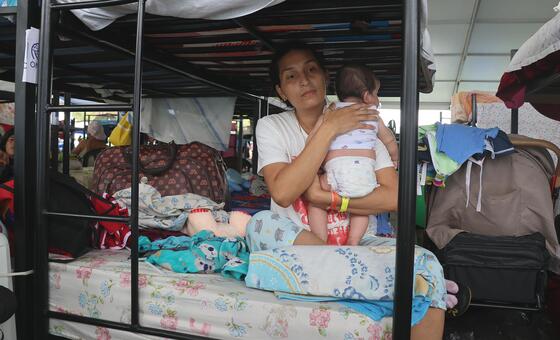
Paula Narvaez, Regional Director for Latin America and the Caribbean, briefed journalists in New York on her recent visit to the country.
Speaking from Chile, she said the earthquakes left more than 5,000 people dead and displaced over 23,000, “but statistics alone cannot capture the human toll and true scale of this tragedy.”
Women on the frontlines
Ms. Narvaez visited some of the hardest-hit areas, including La Guaira, where she met families who lost everything yet are still determined to rebuild their lives.
“I witnessed something that recurs in every emergency: women organizing safe spaces for their families, and caring for others, and frontline responders working tirelessly despite also being personally impacted,” she said.
But amid the resilience, needs remain high. Damage to health facilities, shortages of medicines and equipment, lack of staff, and disruptions to basic services are hampering healthcare, particularly provision of reproductive health services and emergency obstetric care.
Inequalities now evident
“The earthquakes exposed and heightened pre-existing inequalities when it comes to access to healthcare and safety,” she said.
“We know that women do not stop giving birth during an emergency, yet vulnerable women and adolescent girls are more likely to be cut off from the life-saving services they need.”
Ever since the crisis began, UNFPA has been scaling up life-saving reproductive health services and strengthening gender-based violence prevention and response.
The agency and partners have already reached thousands of people. They have distributed reproductive health kits and provided medical equipment and supplies to 16 health facilities.
Solidarity and support
UNFPA is also working alongside other UN agencies to make temporary shelters safer for women and girls
With its work “far from over,” UNFPA is seeking $10 million to expand efforts and reach 121,000 people but has only received 40 per cent of this amount to date.
“Venezuelan communities have demonstrated enormous strength and resilience,” Ms. Narvaez said. “Their courage must now be matched with sustained international solidarity and support.”